Reactive vs Aggressive Dog: Key Differences
Barking and lunging can look scary from the outside. But reactivity and aggression are not the same thing, and the difference changes what you do next.
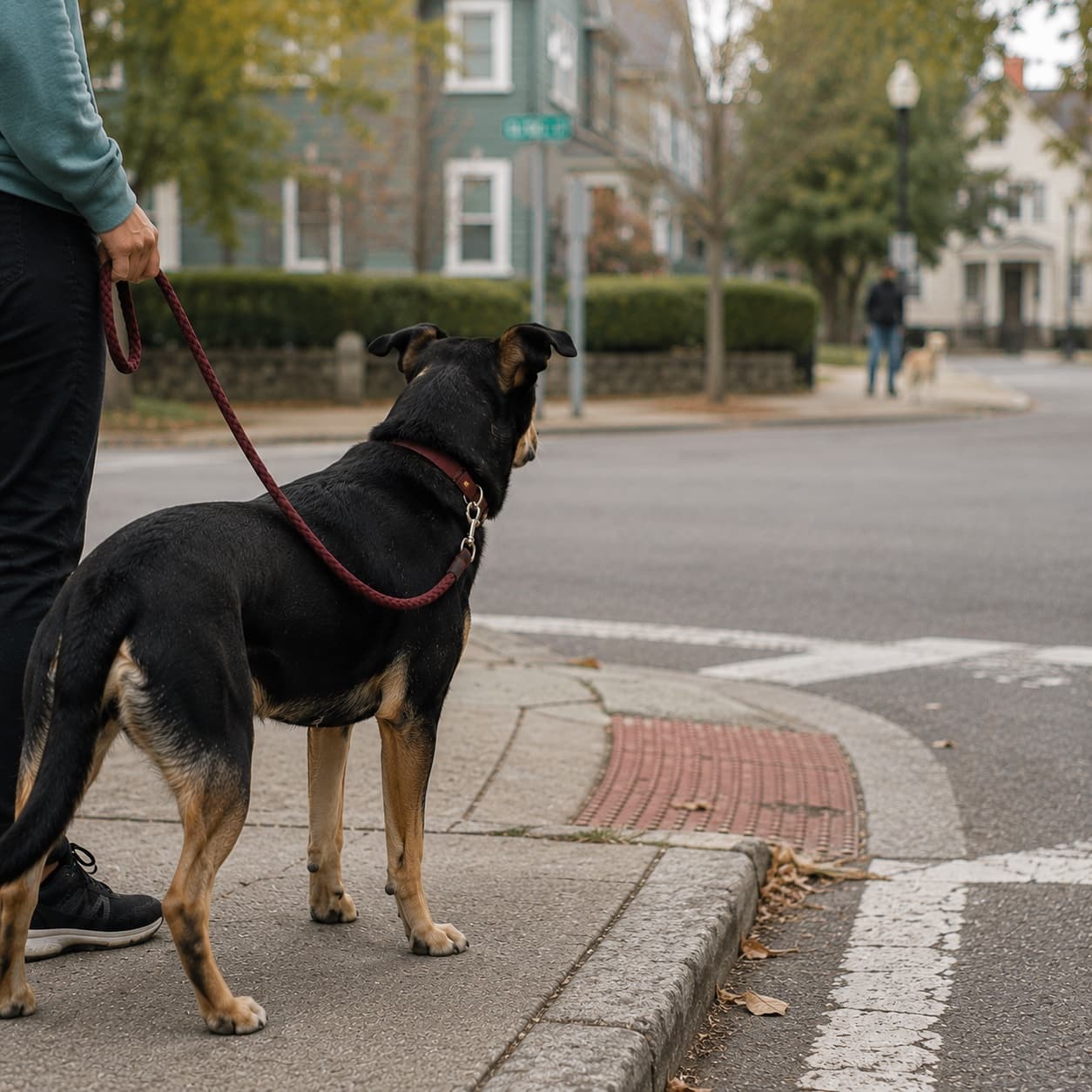
Reactive vs aggressive dog behavior is one of the scariest questions an owner can ask. The same outward behaviors can appear in both patterns: barking, lunging, growling, hard staring, or frantic pulling.
The difference is not whether the behavior is embarrassing. The difference is context, intent, recovery, and safety history.
Reactive vs aggressive dog: comparison
This table helps with triage. It is not a replacement for a qualified behavior assessment.
| Question | More reactive pattern | Higher safety concern |
|---|---|---|
| Likely goal | Create distance, escape pressure, or reach a blocked greeting. | Move toward conflict, bite, or repeatedly threaten at close range. |
| Recovery | Can settle after distance, food, or leaving the area. | Stays highly aroused, redirects, or cannot return to baseline. |
| History | Barking and lunging without bite contact. | Bites, punctures, redirected bites, or escalating incidents. |
| Context | Specific triggers, distances, routes, or leash contexts. | More generalized risk or unpredictable escalation. |
Why the label matters
If you call every reaction aggression, you may jump to punishment, control, and fear. If you ignore genuine bite risk, you can create a safety problem. A better path is to identify the pattern, then choose the least intrusive plan that keeps everyone safe. For the longer-term question owners usually ask next, see whether a reactive dog can be cured.
For many leash cases, the next step is understanding whether the dog is fear-based or access-seeking. Use fear reactive vs frustrated greeter for that distinction.
How to read intent without guessing
You cannot know a dog's intent from one bark. You can make a safer estimate by watching the whole sequence: what happened before the reaction, whether the dog tried to increase or decrease distance, what the body looked like, and how recovery changed after the trigger left.
Use this as a safety screen, not as a diagnosis.
| Signal | Lower concern pattern | Escalation pattern |
|---|---|---|
| Distance choice | The dog relaxes when you create space or leave. | The dog keeps driving forward even when space is available. |
| Warnings | The dog gives clear early signals: stare, freeze, growl, bark, retreat. | Warnings are very short, missing, or followed quickly by contact attempts. |
| Handler control | You can interrupt early and move away safely. | You cannot redirect, hold equipment safely, or create distance. |
| Trend over time | Intensity drops with management and easier walks. | Intensity escalates despite distance, recovery, and reduced exposure. |
Get professional help if you see
- Bite history, punctures, or repeated snap attempts.
- Redirected biting onto the handler, leash, or another pet.
- Escalating intensity even with distance and management.
- Reactions toward children, visitors, or household members.
- A dog who cannot recover after triggers or seems painful.
Is growling aggression?
Growling is a warning signal, not a behavior to punish out of the dog. A growl says the dog is uncomfortable enough to ask for space. If you punish the warning without changing the situation, you may lose the signal while the underlying emotion remains.
Treat growling as useful information: create distance, lower the next setup, and track whether the dog recovers. If growling appears with snapping, bite attempts, children, visitors, or handling, treat it as a professional-help case.
The safest first plan
Until you know the pattern, reduce risk. Stop on-leash greetings, avoid close passes, use routes with exits, and reward calm noticing before the dog tips over. If the main issue is other dogs on walks, start with how to walk a reactive dog.
Evidence basis
This article is grounded in humane, reward-based behavior guidance and PawZen's science page.
Quick answers
How do I know if my dog is reactive or aggressive?
Look at context, intent, recovery, and safety history. Many reactive dogs bark or lunge to create distance. Bite history, redirected biting, escalating threats, or inability to recover raises the safety level.
Can leash reactivity turn into aggression?
It can escalate if the dog repeatedly rehearses panic, is punished near triggers, or is forced into close greetings. Early management and sub-threshold work reduce that risk.
Should I punish aggressive-looking barking?
No. Punishment can suppress warning signals and increase fear. Create distance, prevent rehearsal, and work with a qualified professional if there is bite risk.
When should I hire a behavior professional?
Get help if there is bite history, redirected biting, threats toward people, reactions that are getting worse, or if you cannot safely create distance on walks.
Is growling the same as aggression?
Growling is a warning signal that the dog is uncomfortable. It can be part of an aggression risk pattern, but it should be treated as information, not punished out of the dog.
What is the safest first step if I am unsure?
Prevent close greetings, use distance and exits, log body language and recovery, and get qualified help if there is bite risk, redirected biting, or escalating behavior.
Related reading
- What Is a Reactive Dog? Complete GuideA reactive dog is not a bad dog. Reactivity is an over-the-top response to something the dog finds scary, exciting, frustrating, or overwhelming. The first step is learning what problem you are actually training.
- Fear Reactive vs Frustrated Greeter: Key SignsTwo dogs can bark, lunge, and embarrass you in exactly the same way for opposite reasons. One wants distance. One wants access. Mixing them up is how good owners train the wrong thing.
- Why does my dog bark at every dog on walks? A straight answer.Barking at every dog isn't defiance, isn't dominance, and isn't something you'll fix with a firmer hand. It's one of the most common — and most solvable — forms of reactivity, once you understand what it's actually saying.
- Can a reactive dog be cured? An honest, research-backed answer.Reactivity isn't a defect to eliminate. It's a nervous-system state that can be retrained, managed, and — over time — made almost invisible. Here's what the research actually says.
Start your free assessment
Get a personalized training plan based on your dog — not a generic protocol.
Optional: notify me when the 30-Day Calm Walk Reset program opens (not required to use the free app).