The journal
for the long walk.
Field notes, protocols, owner letters, and the science behind what we ask of you each night. Written by the people building PawZen, with help from board-certified behaviorists.
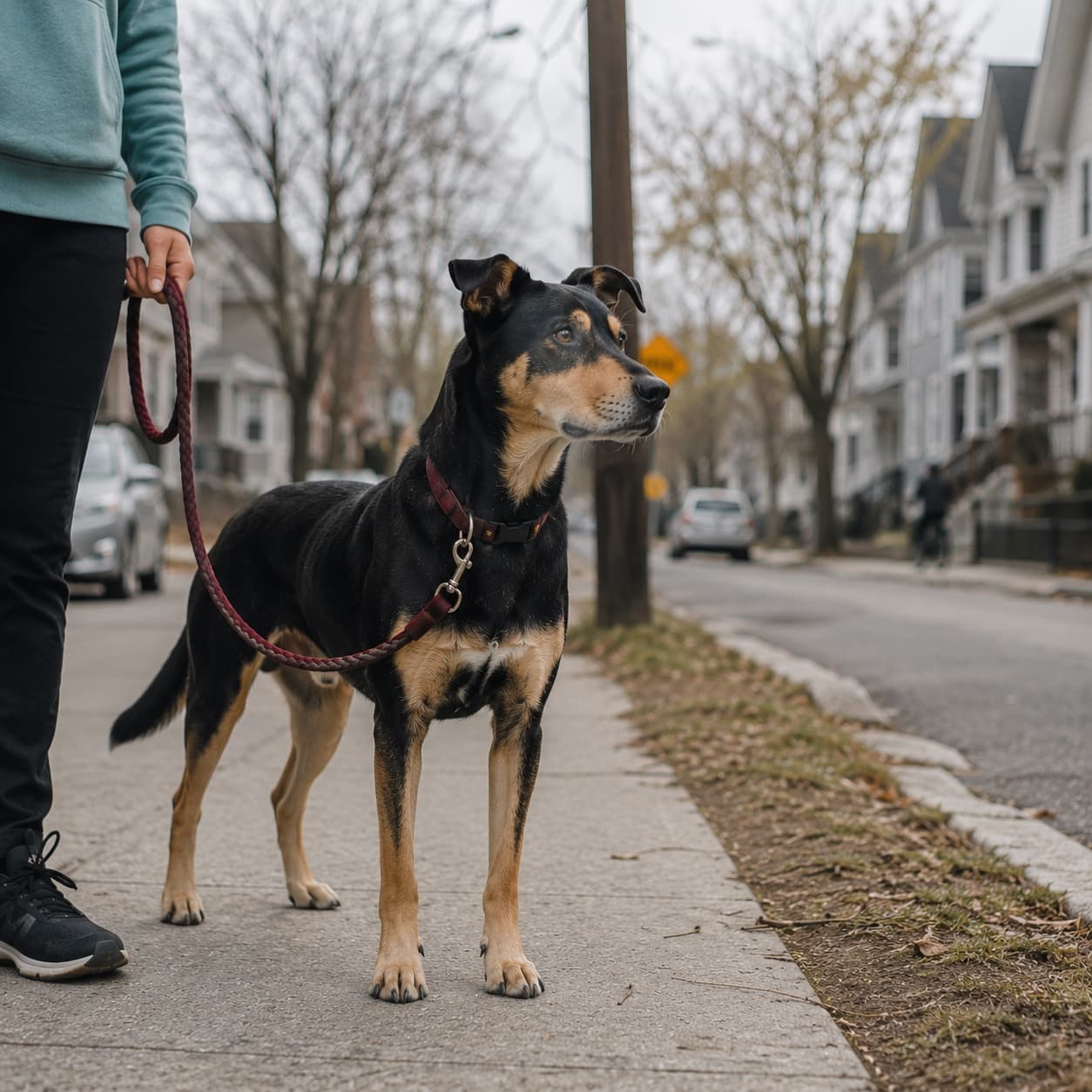
What Is a Reactive Dog? Complete Guide
A reactive dog is not a bad dog. Reactivity is an over-the-top response to something the dog finds scary, exciting, frustrating, or overwhelming. The first step is learning what problem you are actually training.
Editor's picks
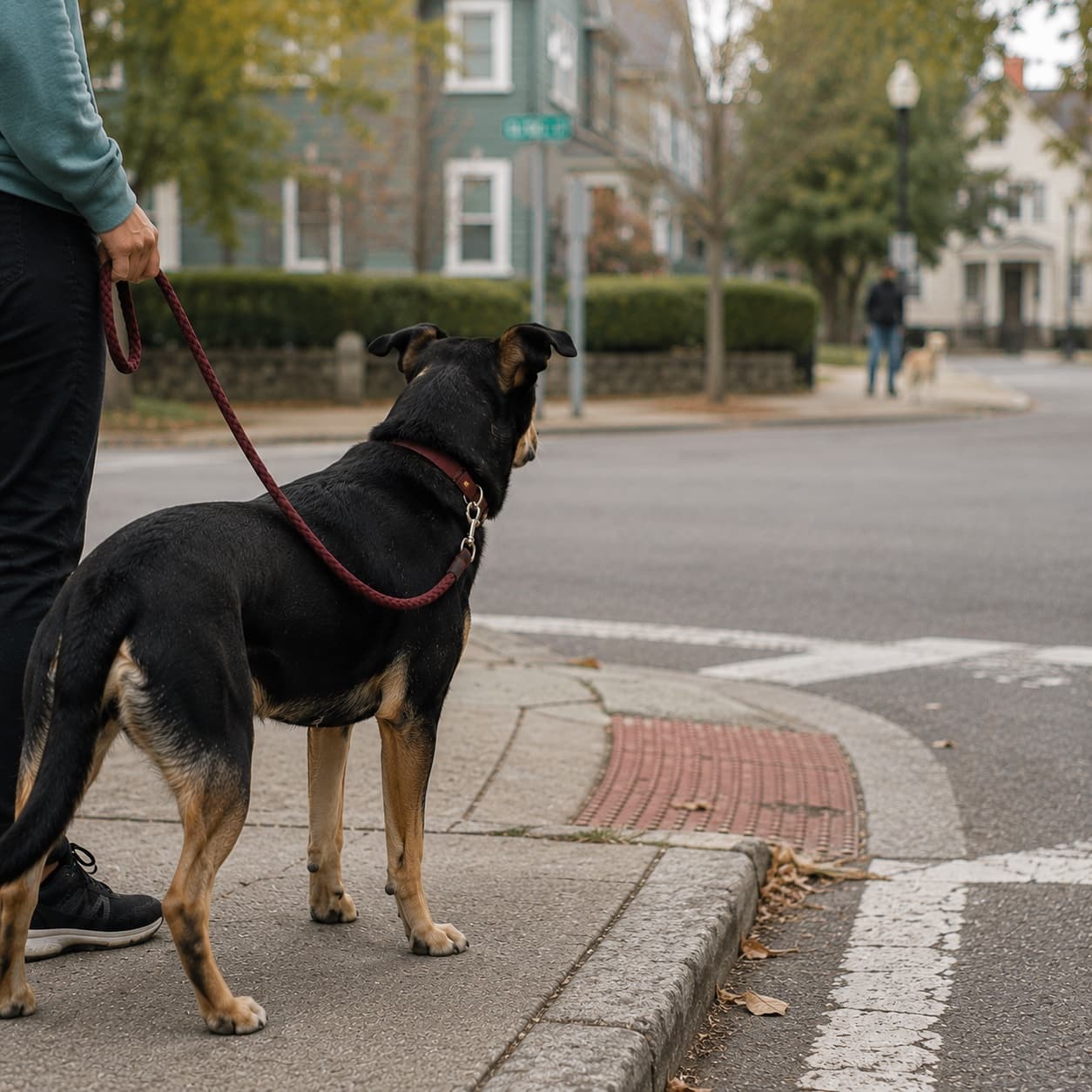
Reactive vs Aggressive Dog: Key Differences
Barking and lunging can look scary from the outside. But reactivity and aggression are not the same thing, and the difference changes what you do next.
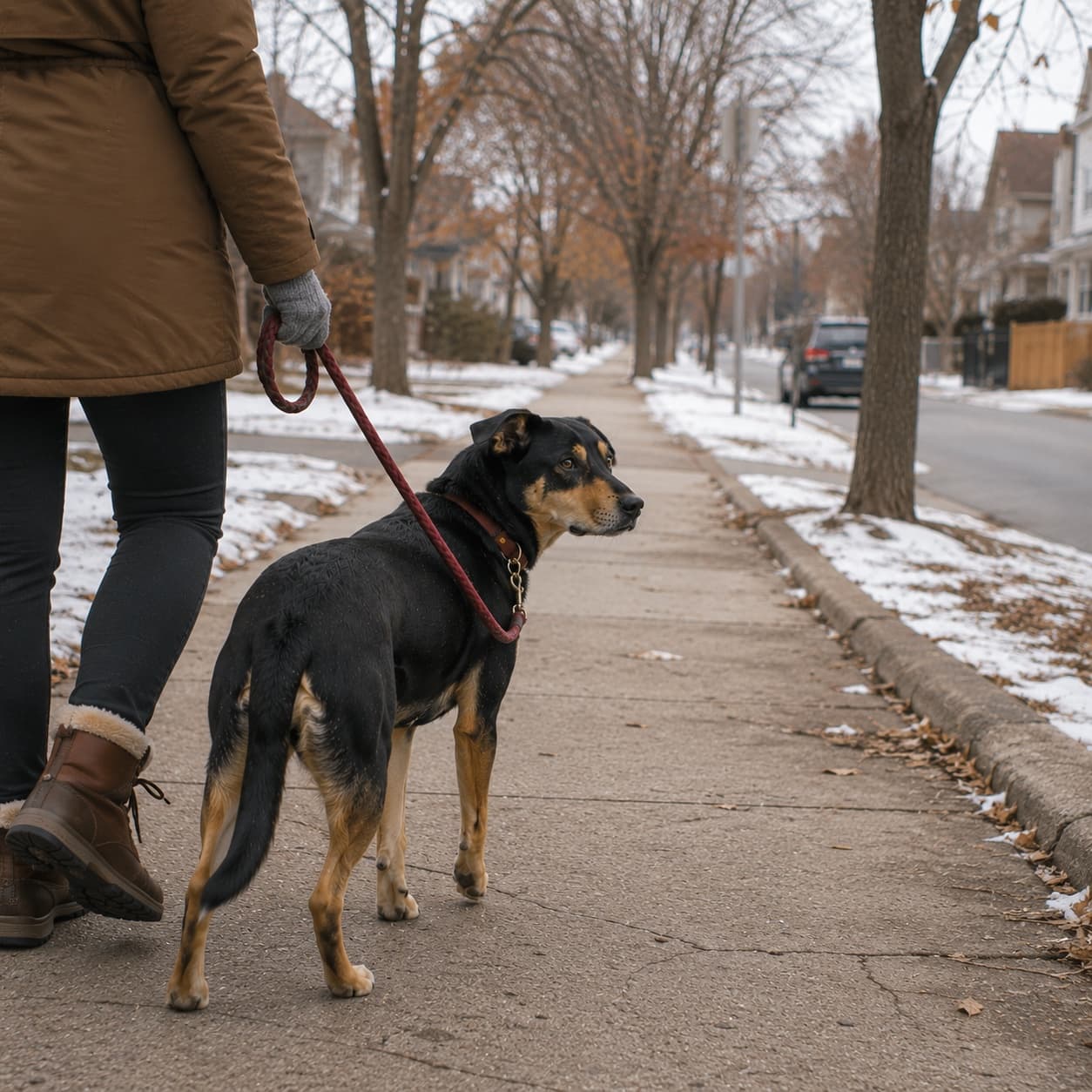
How to Walk a Reactive Dog: Step-by-Step
A good reactive dog walk is planned before the leash clips on. The goal is not to survive the hardest route. It is to stack small, recoverable wins.
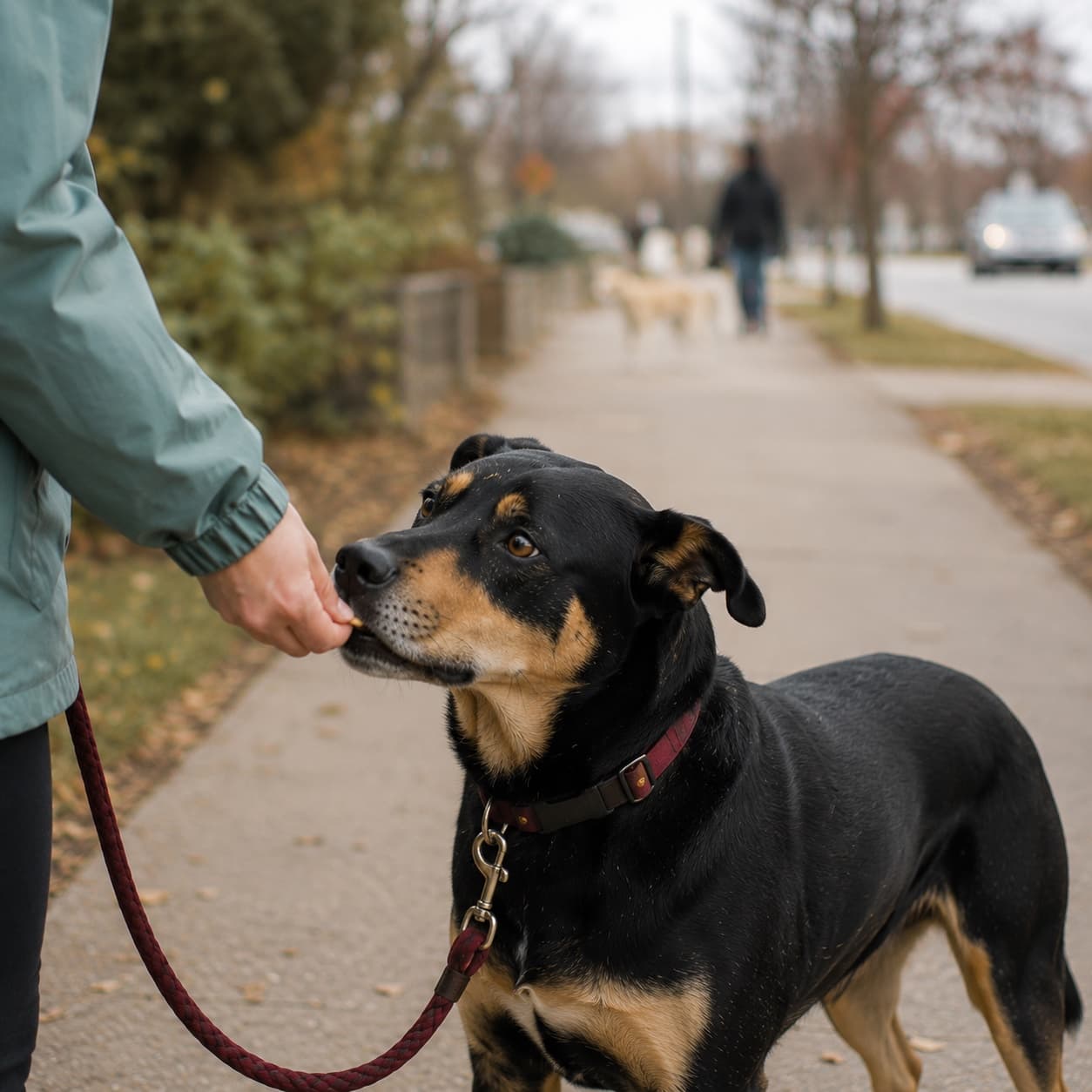
Counter-Conditioning for Dogs: Step by Step
Counter-conditioning is not bribery. It is a structured way to make a trigger predict something good before your dog is too overwhelmed to learn.
Recent dispatches
Reactive vs Aggressive Dog: Key Differences
Barking and lunging can look scary from the outside. But reactivity and aggression are not the same thing, and the difference changes what you do next.
How to Walk a Reactive Dog: Step-by-Step
A good reactive dog walk is planned before the leash clips on. The goal is not to survive the hardest route. It is to stack small, recoverable wins.
Counter-Conditioning for Dogs: Step by Step
Counter-conditioning is not bribery. It is a structured way to make a trigger predict something good before your dog is too overwhelmed to learn.
My Dog Lunges at Other Dogs: What to Do
Lunging is loud, physical, and embarrassing. It is also information: your dog is too close, too aroused, or too overwhelmed for the current setup.
BAT 2.0 Dog Training for Reactive Dogs
BAT 2.0 is built around a deceptively simple idea: when a dog can gather information and choose calmly, distance itself becomes reinforcement.
Karen Overall Relaxation Protocol Guide
Reactive dogs do not only need trigger work. They also need a nervous system that can settle. The relaxation protocol gives calm behavior a repeatable structure.
Best Treats for Reactive Dog Training
If your dog will not take treats outside, the food may be boring. But more often, the setup is too hard. Treat choice and threshold distance work together.
Reactive Dog Training Plan for the Next 7 Days
If walks feel chaotic, don't start with a bigger theory. Start with seven calm days: fewer rehearsed reactions, cleaner distance, short LAT reps, and a simple way to tell whether the plan is working.
Fear Reactive vs Frustrated Greeter: Key Signs
Two dogs can bark, lunge, and embarrass you in exactly the same way for opposite reasons. One wants distance. One wants access. Mixing them up is how good owners train the wrong thing.
What to Do After a Reactive Dog Meltdown
After a full barking, lunging, screaming meltdown, the useful question is not 'how do I correct that?' It is: how do I help the nervous system come back down and prevent tomorrow from becoming worse?
Dog Reactive on Leash but Fine Off Leash: Why?
A dog can be social in daycare and still fall apart on leash. That is not hypocrisy. It is context: restricted movement, leash tension, blocked greetings, and a walk environment your dog cannot control.
Why does my dog bark at every dog on walks? A straight answer.
Barking at every dog isn't defiance, isn't dominance, and isn't something you'll fix with a firmer hand. It's one of the most common — and most solvable — forms of reactivity, once you understand what it's actually saying.
How long to desensitize a reactive dog? A realistic timeline.
Every reactive dog owner wants a timeline. The real one has four phases, a handful of variables, and one rule most programs get wrong: consistency beats intensity every time.
What is LAT training? The most underused tool for reactive dogs.
LAT is deceptively simple: mark the instant your dog sees a trigger, then pay. Done right, it rewires the emotional response from 'threat' to 'predictor of good things.' Done wrong, it's just an expensive way to feed your dog in front of scary stuff.
What is trigger stacking? Why your dog's meltdown wasn't random.
A trigger isn't the cause. The cause was yesterday — and the day before that. Understanding this one mechanism changes everything about how you read your dog's walks.
Can a reactive dog be cured? An honest, research-backed answer.
Reactivity isn't a defect to eliminate. It's a nervous-system state that can be retrained, managed, and — over time — made almost invisible. Here's what the research actually says.
Reactive Rescue Dog: What to Expect and How to Help
A reactive rescue dog can absolutely become a calmer family member. The first weeks are about safety, sleep, predictable routines, and distance — not fixing every trigger on day one.
Reactive Dog in an Apartment or City: A Practical Guide
City life adds predictable triggers: tight hallways, elevators, sudden dogs around corners, and limited escape routes. The plan is distance, timing, and rehearsal control.
Best Harness for a Reactive Dog (Without Fighting the Leash)
Harness choice changes whether your dog can turn, breathe, and recover after a reaction. Here is what to look for and what to avoid on reactive walks.
Topics we cover
§ 04 — IndexOne letter, every
Sunday morning.
A short essay, one field note, one protocol question answered. No promotions, no urgency.