My Dog Lunges at Other Dogs: What to Do
Lunging is loud, physical, and embarrassing. It is also information: your dog is too close, too aroused, or too overwhelmed for the current setup.
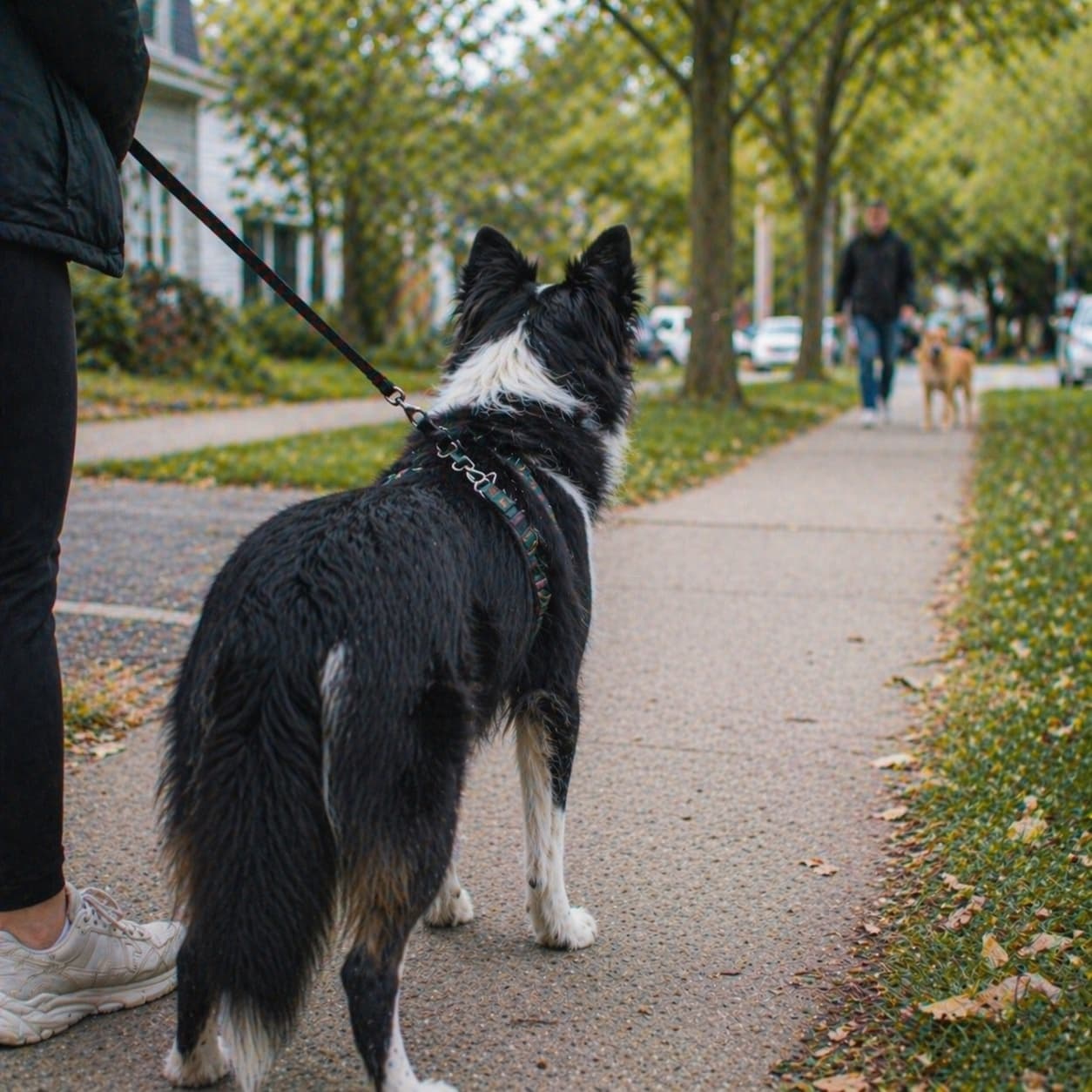
If your dog lunges at other dogs, the walk can feel like it changes in one second: your dog sees the trigger, the leash tightens, the bark explodes, and suddenly everyone is looking.
The search phrase owners type is often blunt: my dog lunges at other dogs, what do I do? The answer is not to wait for the lunge and then correct it. The answer is to change the distance and timing before the lunge happens.
Lunging is not a training plan. It is a sign that the plan needs more distance, earlier information, and fewer rehearsals.
Why dogs lunge at other dogs on walks
| Driver | What it can look like | What helps first |
|---|---|---|
| Fear | Tight body, hard stare, barking to make the dog go away. | More distance and counter-conditioning. |
| Frustration | Forward pulling, whining, bouncing, blocked greeting. | No on-leash greetings and reward disengagement. |
| Trigger stacking | The reaction seems bigger than the trigger itself. | Recovery day and easier next walk. |
| Leash restriction | Worse on leash than off leash or in open spaces. | Curved movement, distance, and relaxed leash handling. |
What to do in the moment
Once the lunge starts, your dog is not in the best learning state. The priority is a clean exit: turn away, cross the street, step behind a parked car, or scatter food on the ground if your dog can still eat.
Then review the setup. If lunging is paired with barking at every dog, read why dogs bark at every dog on walks before adding harder training.
Do this before the next walk
- Choose a route with wider sightlines and easy exits.
- Start at twice the distance where the last lunge happened.
- Load high-value food before leaving the house.
- Practice two U-turns before any trigger appears.
- End the walk earlier if recovery slows down.
High-value food will not solve lunging by itself, but it can buy cleaner repetitions when the distance is right. If your dog spits out kibble or refuses food on walks, use best treats for reactive dog training to tune the setup before the next session.
What progress looks like
Progress may not start as a calm pass. It may start as one second of looking without launching, eating after a dog passes, or recovering in 30 seconds instead of 10 minutes. PawZen tracks those small shifts so the next walk is based on the trend, not on shame from the last one.
When lunging is a safety case
Get professional support if lunging includes redirected biting, bite attempts, slipping equipment, escalating intensity, or a dog you cannot physically move away from triggers. Management is still training, but safety cases need a more controlled plan.
Evidence basis
This article is grounded in humane, reward-based behavior guidance and PawZen's science page.
Quick answers
Why does my dog lunge at other dogs?
Common drivers include fear, frustration, excitement, leash restriction, prior bad experiences, or trigger stacking. The lunge usually means the dog has crossed threshold.
Should I correct my dog for lunging?
No. Corrections can increase fear and make the trigger feel more dangerous. Focus on distance, exits, prevention, and reinforcing earlier calmer behavior.
Can lunging be fixed?
Many dogs improve a lot. The first goal is not a perfect pass; it is noticing the trigger at a distance and recovering without a full reaction.
What should I do the next time my dog lunges?
Leave cleanly, create distance, and log what happened. Next time, start farther away, choose an easier route, and reward the first notice before the lunge starts.
Related reading
- Why does my dog bark at every dog on walks? A straight answer.Barking at every dog isn't defiance, isn't dominance, and isn't something you'll fix with a firmer hand. It's one of the most common — and most solvable — forms of reactivity, once you understand what it's actually saying.
- How to Walk a Reactive Dog: Step-by-StepA good reactive dog walk is planned before the leash clips on. The goal is not to survive the hardest route. It is to stack small, recoverable wins.
- Reactive vs Aggressive Dog: Key DifferencesBarking and lunging can look scary from the outside. But reactivity and aggression are not the same thing, and the difference changes what you do next.
- Best Treats for Reactive Dog TrainingIf your dog will not take treats outside, the food may be boring. But more often, the setup is too hard. Treat choice and threshold distance work together.
Start your free assessment
Get a personalized training plan based on your dog — not a generic protocol.
Optional: notify me when the 30-Day Calm Walk Reset program opens (not required to use the free app).