Karen Overall Relaxation Protocol Guide
Reactive dogs do not only need trigger work. They also need a nervous system that can settle. The relaxation protocol gives calm behavior a repeatable structure.
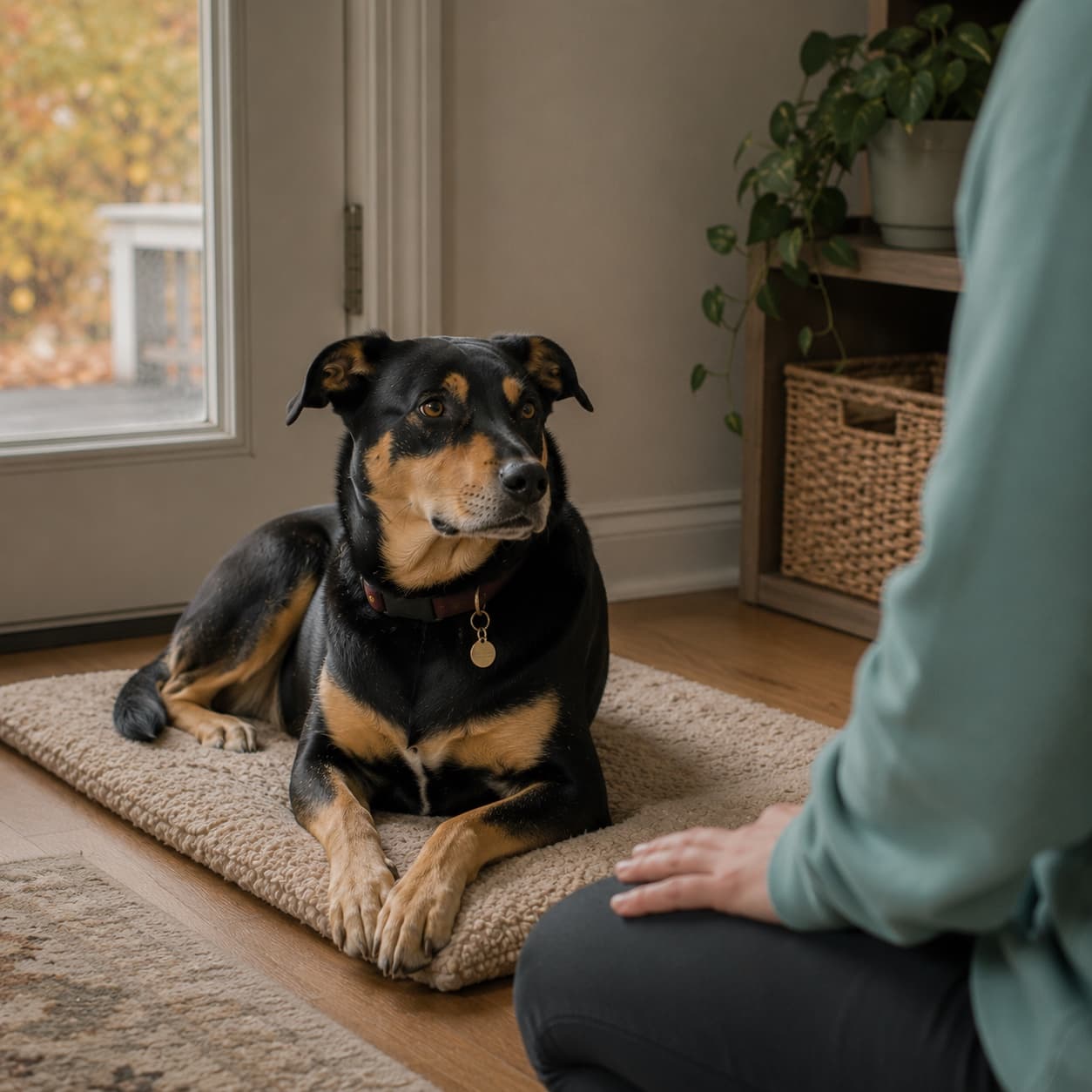
The Karen Overall Relaxation Protocol gives calm behavior a structure. For reactive dogs, that can be powerful because many dogs do not need more arousal skills. They need practice settling while normal life happens around them.
This is foundation work. It does not replace trigger training, but it makes trigger training easier to absorb.
Where relaxation fits reactive dog training
| Training need | Relaxation helps by | It does not replace |
|---|---|---|
| Baseline arousal | Teaching calm behavior as a practiced skill. | Route management and trigger distance. |
| Recovery | Giving the dog a familiar reset pattern after stress. | A decompression plan after a meltdown. |
| Home triggers | Practicing settling near mild household movement. | Safety plans for guests or bite risk. |
Start easier than you think
Many owners practice too close to windows, doors, or busy rooms. Start where your dog can succeed. A quiet living room or bedroom is not too easy; it is the point. You are building fluency before testing it.
If your dog is recovering from a recent reaction, pair this with the reactive dog meltdown recovery plan.
Make the setup easier if
- Your dog pops up repeatedly or cannot settle back down.
- They stare at the doorway, window, or sounds outside.
- They refuse food they normally like.
- They finish the session more wired than they started.
- The next walk starts with higher arousal.
How PawZen uses calm baselines
PawZen treats relaxation as part of the weekly training load. A dog who is stacked, underslept, or slow to recover may need a relaxation day more than another trigger session. That is not falling behind. That is training the system that does the learning.
Evidence basis
This article is grounded in humane, reward-based behavior guidance and PawZen's science page.
Quick answers
What is the Karen Overall Relaxation Protocol?
It is a structured series of calm-stay exercises that teach a dog to relax while small distractions happen. It is commonly used as a foundation skill for anxious or reactive dogs.
Can the relaxation protocol fix reactivity?
Not by itself. It builds baseline calm and recovery skills, but trigger-specific work still needs distance, counter-conditioning, and management.
How often should I practice the relaxation protocol?
Short daily practice is ideal. Stop while the dog is still successful, and make the setup easier if the dog pops up, scans, or cannot settle.
Where should I practice relaxation with a reactive dog?
Start in the easiest room at home. Later, practice near mild distractions, doorways, yards, or quiet outdoor spaces only when the dog can stay relaxed.
Related reading
- What to Do After a Reactive Dog MeltdownAfter a full barking, lunging, screaming meltdown, the useful question is not 'how do I correct that?' It is: how do I help the nervous system come back down and prevent tomorrow from becoming worse?
- What is trigger stacking? Why your dog's meltdown wasn't random.A trigger isn't the cause. The cause was yesterday — and the day before that. Understanding this one mechanism changes everything about how you read your dog's walks.
- Reactive Dog Training Plan for the Next 7 DaysIf walks feel chaotic, don't start with a bigger theory. Start with seven calm days: fewer rehearsed reactions, cleaner distance, short LAT reps, and a simple way to tell whether the plan is working.
Start your free assessment
Get a personalized training plan based on your dog — not a generic protocol.
Optional: notify me when the 30-Day Calm Walk Reset program opens (not required to use the free app).