Can a reactive dog be cured? An honest, research-backed answer.
Reactivity isn't a defect to eliminate. It's a nervous-system state that can be retrained, managed, and — over time — made almost invisible. Here's what the research actually says.
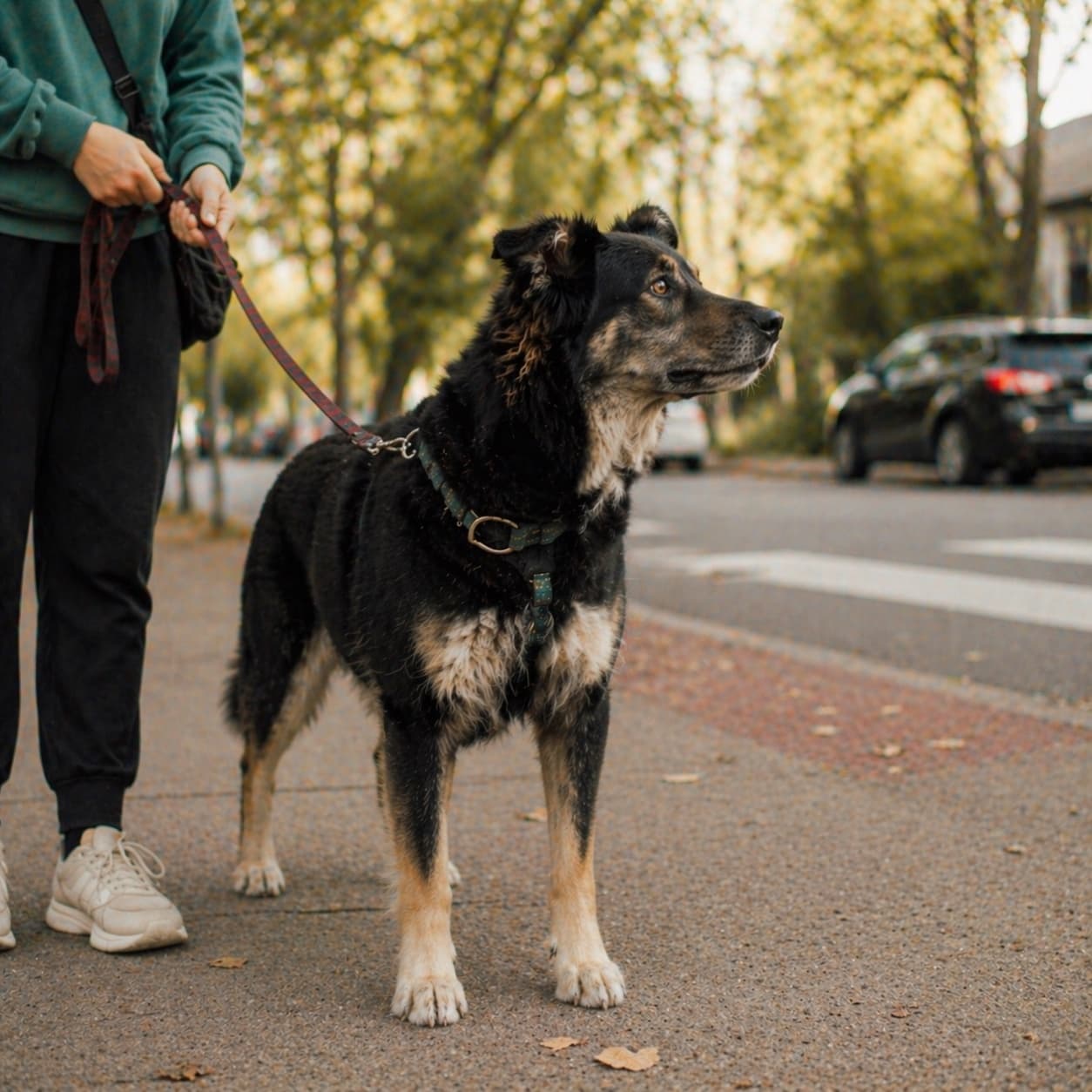
Every reactive dog owner eventually types some version of this into a search bar: can a reactive dog be cured? We've typed it too. We're going to give you the honest answer, which is more nuanced and more hopeful than either "yes" or "no."
The short answer
Usually not "cured"— not in the sense of "one day your dog will be indifferent to other dogs, the way a non-reactive dog is." That outcome does happen, but it's the exception, and promising it would be dishonest.
Almost always "transformed," though. With the right protocol, most reactive dogs reach a state where the reactivity is so well-managed that a stranger on the street wouldn't notice it. Walks become enjoyable. Triggers become events you handle, not disasters you survive. That's a real outcome, and it's the one the research supports.
| Frame | What it promises | Why it matters |
|---|---|---|
| Cured | The old response disappears completely. | Possible for some single-trigger cases, but too brittle as a universal goal. |
| Managed | You prevent the worst setups and protect recovery. | This is not failure; it is how you stop rehearsing the old pattern. |
| Transformed | A new default response outcompetes the old one most of the time. | This is the honest, measurable outcome most owners can build toward. |
Why "cured" is the wrong frame
Reactivity isn't a defect. It's a pattern— a trained (or innate, or trauma-driven) response that fires under specific conditions. Behavior science doesn't delete patterns. It builds new ones that are stronger, more rehearsed, and more rewarded than the old one.
That means somewhere in your dog's nervous system, the old pattern lives on, even after a year of beautiful walks. The goal isn't to erase it. The goal is to build a new default that fires first, so reliably that the old one never gets a chance to run.
A reactive dog isn't a broken dog. It's a dog with a loud, well-rehearsed response that we need to outcompete with a better one.
What "transformation" actually looks like
Here's what we see in the data and in the dogs we work with, across roughly 12 months of consistent training:
Month 1
Management mode. You stop losing ground. Fewer rehearsals of the reaction because you're using distance and route-planning better. The first time you notice yourself not flinching at a bush, because you know what's coming.
Months 2–3
First visible shifts. Threshold distance shrinks by 20–40%. Recovery after a trigger drops from several minutes to under a minute. Your dog starts checking in with you when it sees another dog, instead of fixating.
Months 4–6
The baseline arousal is lower. Triggers that used to ruin a walk now produce a glance and a treat. You have entire walks where nothing happens. You notice you're breathing normally on walks. This is the most underrated milestone and the one owners rarely write about.
Months 6–12
Stable management. Reactivity is still there — bad days happen, often when stress has stacked — but you have a calibrated sense of when to push and when to decompress. Your dog has a coping behavior (look at handler, turn away, pattern game) that runs by default under pressure. Most owners at this point say some version of, "my dog is still reactive, but it doesn't run my life anymore."
Milestones that mean transformation is happening
- Your dog notices a trigger and checks in before you ask.
- Recovery drops from minutes to seconds after a surprise encounter.
- You can choose a calmer route without feeling like the day failed.
- A bad walk no longer turns into three bad walks.
- You measure progress by trend, not by the fantasy of never reacting again.
What the research actually says
Studies on counter-conditioning and desensitization for reactive dogs — the protocol stack behind most serious training (including LAT) — show measurable improvement in the majority of cases within 8–16 weeks (e.g., Rooney & Cowan, 2011; Blackwell et al., 2008). The size of the improvement varies widely. Some dogs flatline to near-normal. Others show modest but life-changing reductions. Very few show no change at all if the protocol is followed consistently.
"Consistent" is doing a lot of work in that sentence. Reactivity training is a discipline that rewards daily effort and punishes gaps. A five-day break at the wrong moment can cost you two weeks of progress. This is why a daily loop matters more than any single technique. For realistic timelines, see how long desensitization takes.
The three cases where "cured" does happen
For completeness: there are specific situations where reactivity resolves almost completely, and they're worth naming.
- Adolescent spike that settles.Some dogs become reactive between 6–18 months due to maturation and a bad experience, and with good management, the reactivity largely fades by age 3–4. This is common enough to be worth naming, and it's why we never tell owners of young dogs that it's permanent.
- Single-trigger reactivity with clean training. A dog that's only reactive to, say, skateboards, trained carefully against that specific trigger, can get to genuine indifference. Generalized reactivity is harder.
- Trauma-based reactivity with therapy-level work.When a specific event caused the reactivity (an attack, an accident) and the dog is worked patiently with a qualified behavior consultant — often with vet-behavior support — resolution is possible.
What changes when you reframe "cure" as "management"
This is the part we think most owners don't hear often enough: the goal isn't a perfect dog.The goal is walks you both enjoy. Progress measured in recovery time, not zero reactions. A Reactivity Score™ that trends down across months, even if individual walks are still noisy.
When you stop chasing "cured" and start chasing "better, measurably, over time," everything changes. The pressure comes off. You start celebrating the 30-second recovery that used to take 10 minutes. You notice the walks where nothing happens. You stop grading your dog and start supporting it. If a bad walk just happened, use the recovery plan in what to do after a reactive dog meltdown before judging the whole arc.
That's the outcome PawZen is built for. Not a miracle. A daily, visible, compounding path that almost any committed owner can walk.
Evidence basis
This article is grounded in humane, reward-based behavior guidance and PawZen's science page.
Quick answers
Can a reactive dog ever become normal on walks?
Many reactive dogs become calm enough that strangers would not notice the history. That is real transformation. Complete indifference can happen, but it is not the honest promise for every dog.
Does management mean my dog failed training?
No. Management is part of training. Distance, route choices, recovery days, and trigger budgeting prevent rehearsal while the new behavior becomes stronger.
Will one bad walk undo months of work?
Usually not. One bad walk is data, not doom. Look at recovery time and the trend across several walks before calling it regression.
Related reading
- What Is a Reactive Dog? Complete GuideA reactive dog is not a bad dog. Reactivity is an over-the-top response to something the dog finds scary, exciting, frustrating, or overwhelming. The first step is learning what problem you are actually training.
- What to Do After a Reactive Dog MeltdownAfter a full barking, lunging, screaming meltdown, the useful question is not 'how do I correct that?' It is: how do I help the nervous system come back down and prevent tomorrow from becoming worse?
- How long to desensitize a reactive dog? A realistic timeline.Every reactive dog owner wants a timeline. The real one has four phases, a handful of variables, and one rule most programs get wrong: consistency beats intensity every time.
- Reactive Rescue Dog: What to Expect and How to HelpA reactive rescue dog can absolutely become a calmer family member. The first weeks are about safety, sleep, predictable routines, and distance — not fixing every trigger on day one.
- Best Harness for a Reactive Dog (Without Fighting the Leash)Harness choice changes whether your dog can turn, breathe, and recover after a reaction. Here is what to look for and what to avoid on reactive walks.
Start your free assessment
Get a personalized training plan based on your dog — not a generic protocol.
Optional: notify me when the 30-Day Calm Walk Reset program opens (not required to use the free app).