BAT 2.0 Dog Training for Reactive Dogs
BAT 2.0 is built around a deceptively simple idea: when a dog can gather information and choose calmly, distance itself becomes reinforcement.
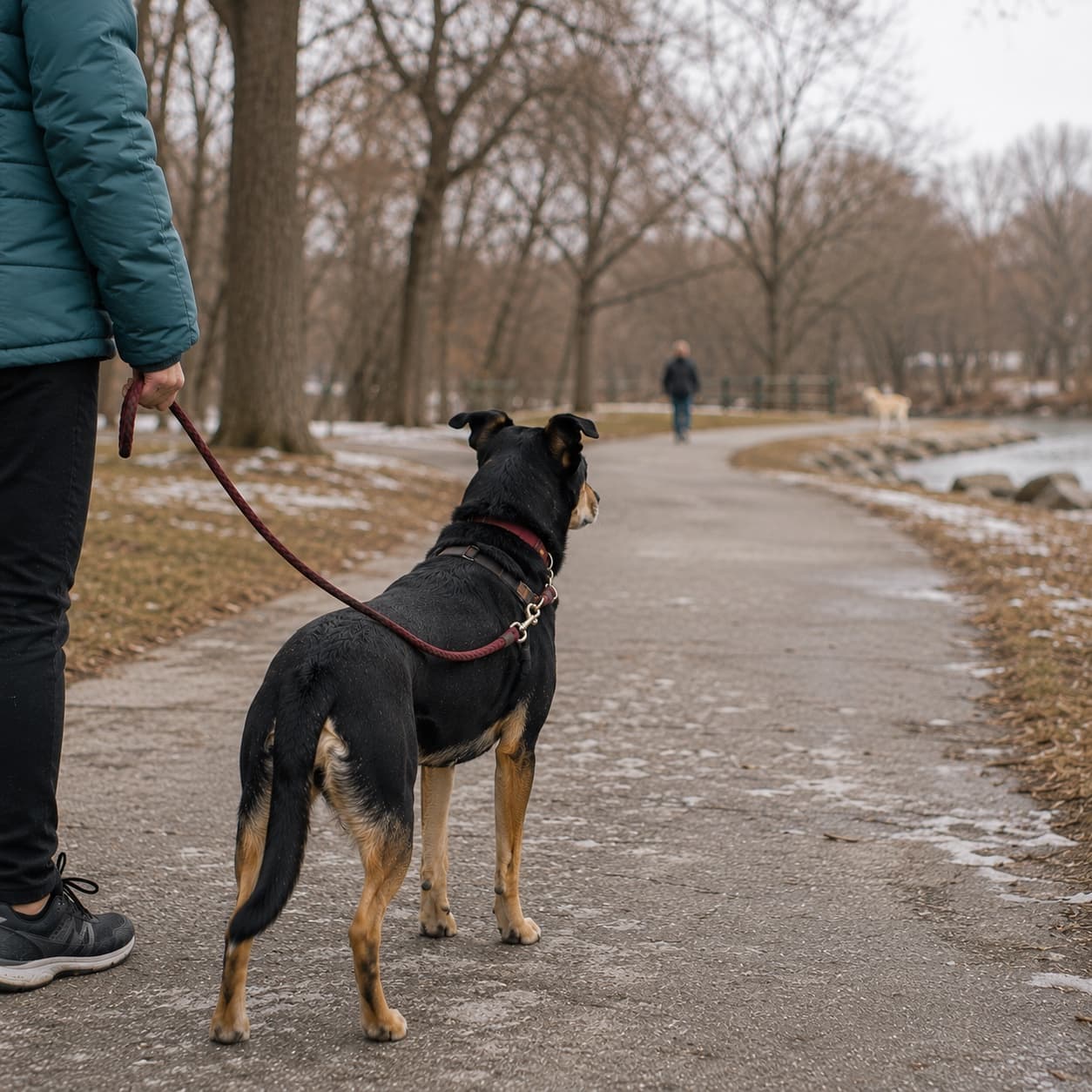
BAT 2.0 dog training, short for Behavior Adjustment Training, is a protocol for helping dogs make calmer choices around triggers. Instead of pushing the dog closer, BAT protects distance and uses functional rewards.
For reactive dogs, that matters because distance is not avoidance when it is used strategically. Distance is often the first reward the dog can understand.
BAT 2.0 vs LAT vs counter-conditioning
| Protocol | Core idea | Best fit |
|---|---|---|
| BAT 2.0 | Use distance, choice, and functional rewards. | Dogs who need agency and calmer information gathering. |
| LAT | Mark the first look at a trigger, then pay. | Dogs who can notice a trigger and stay under threshold. |
| CC/DS | Trigger predicts high-value reinforcement. | Changing the emotional meaning of specific triggers. |
What a BAT-style setup needs
BAT works best when the dog has room. A narrow sidewalk with surprise dogs is usually too messy for a clean setup. Open parks, large parking lots, or quiet fields with a planned helper dog make the choices easier to read.
If your real-world walks are too chaotic, use how to walk a reactive dog for management and save BAT-style sessions for cleaner environments.
Good BAT 2.0 ingredients
- Enough distance that the dog is curious, not frantic.
- A loose leash and slow handler movement.
- A trigger that stays predictable and does not rush the dog.
- Permission for the dog to look, sniff, turn, and move away.
- Short sessions that end before arousal climbs.
When BAT is not the first choice
If your dog cannot eat, cannot turn away, redirects, or explodes as soon as the trigger appears, start with easier management and recovery. BAT is not magic; it still depends on threshold distance. PawZen can help decide whether today is a BAT-style day, a LAT day, or a recovery day.
Evidence basis
This article is grounded in humane, reward-based behavior guidance and PawZen's science page.
Quick answers
What is BAT 2.0 dog training?
BAT 2.0, or Behavior Adjustment Training, uses carefully managed distance and functional rewards so the dog can notice a trigger, make calm choices, and move away without rehearsing reactivity.
Is BAT 2.0 the same as LAT?
No. LAT marks and rewards looking at a trigger. BAT focuses more on setup, choice, natural movement, and functional rewards such as increasing distance.
Can I do BAT 2.0 on normal neighborhood walks?
Some BAT principles help on walks, but clean BAT setups are usually easier in open spaces with planned distance and predictable helper triggers.
Is BAT 2.0 good for frustrated greeters?
It can help, especially when the dog needs to learn calmer information gathering. Frustrated greeters may also need impulse control and structured social access.
Related reading
- Counter-Conditioning for Dogs: Step by StepCounter-conditioning is not bribery. It is a structured way to make a trigger predict something good before your dog is too overwhelmed to learn.
- What is LAT training? The most underused tool for reactive dogs.LAT is deceptively simple: mark the instant your dog sees a trigger, then pay. Done right, it rewires the emotional response from 'threat' to 'predictor of good things.' Done wrong, it's just an expensive way to feed your dog in front of scary stuff.
- Fear Reactive vs Frustrated Greeter: Key SignsTwo dogs can bark, lunge, and embarrass you in exactly the same way for opposite reasons. One wants distance. One wants access. Mixing them up is how good owners train the wrong thing.
- How to Walk a Reactive Dog: Step-by-StepA good reactive dog walk is planned before the leash clips on. The goal is not to survive the hardest route. It is to stack small, recoverable wins.
- Dog Reactive on Leash but Fine Off Leash: Why?A dog can be social in daycare and still fall apart on leash. That is not hypocrisy. It is context: restricted movement, leash tension, blocked greetings, and a walk environment your dog cannot control.
Start your free assessment
Get a personalized training plan based on your dog — not a generic protocol.
Optional: notify me when the 30-Day Calm Walk Reset program opens (not required to use the free app).